Dual AI + Grounded Architecture
Runs offline on local chips with Gemma 4 E2B LiteRT, or connects to Gemini 3.6 Flash through a contract-first grounded generator/verifier pipeline with visible source provenance.
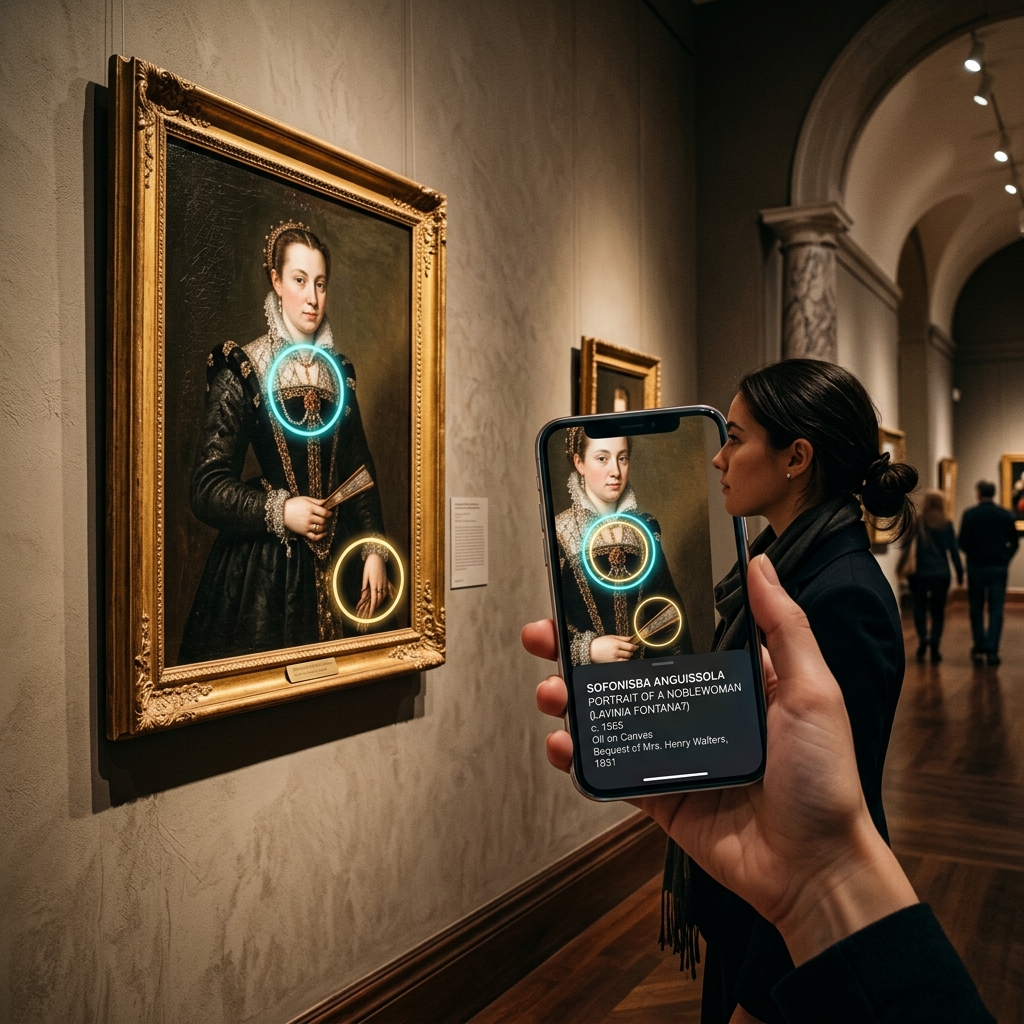
Choose a museum route, scan artwork and labels, obtain source-grounded analysis, zoom into details directly inside chat, and speak with Clio through native Live audio across the app. Choose local privacy with Gemma 4 or cloud depth via Gemini, with clear fallback paths and EU AI guardrails.
MOSTRAmi combines robust on-device modules and cloud generative power to offer you an unprecedented premium museum assistant.
Runs offline on local chips with Gemma 4 E2B LiteRT, or connects to Gemini 3.6 Flash through a contract-first grounded generator/verifier pipeline with visible source provenance.
Speak naturally with the AI curator through Gemini Live native audio: continuous listening, voice response, barge-in, visible session status, and local fallback when offline assets are installed.
3-tier pipeline: on-device neural Piper (free, offline, privacy-first), premium cloud neural voices (Gemini) when you choose quality mode, and a system fallback. Expressive delivery comes from voice personas: not artificial pitch shifts. 10 voices across 5 languages.
Each museum can expose curated packs with official maps, duration, audience, artwork lists, and route steps. Loading a pack creates a guided visit and sends the visitor straight to the first scan.
The artwork frame freezes instantly, then chat becomes visual: pinch-to-zoom, tap detected points, circle a detail, and ask Clio about that exact crop.
Quality metrics system based on thumbs up/down connected to Firebase Firestore. Direct report of AI content with full GDPR support.
Distance sorting, route launch, optional location mode, and offline map viewing remain available without turning the museum section into a settings panel.
The website is structured like a digital museum. Visitors move horizontally across rooms and vertically through the story: from scan, to context, to voice, to sources, to memory.
Camera, OCR, profile, and consent become a calm first threshold. The visitor understands what Clio sees, which mode is active, and when the phone can leave the frame.
The captured artwork becomes explorable: pinch, tap a point, circle a crop, and let the next answer focus on that exact visual detail.
Native audio turns the guide into a conversation. Listening, speaking, interruption, retry, and fallback states stay visible without repeated taps.
Museum packs, critic datasets, and MOSTRAmi KB appear as source chips. The visitor sees where the interpretation comes from.
Museums can prepare guided packs for families, first visits, scholar routes, or temporary exhibitions. The app loads the route and starts the visit without asking the user to configure a maze of options.
Selects evidence and assigns exact, stable source IDs.
Produces answer, TTS script and atomic claim-to-source mappings.
Rejects missing, duplicate or invented source references deterministically.
Checks grounding, safety and unsupported claims before delivery.
Shows verified claim citations and sends approved text to local or Live audio.
Representative marketing visuals for the v0.8.0 feature line. They are not exact-device release evidence; fresh captures from the signed 0.8.0 artifact remain a distribution gate.
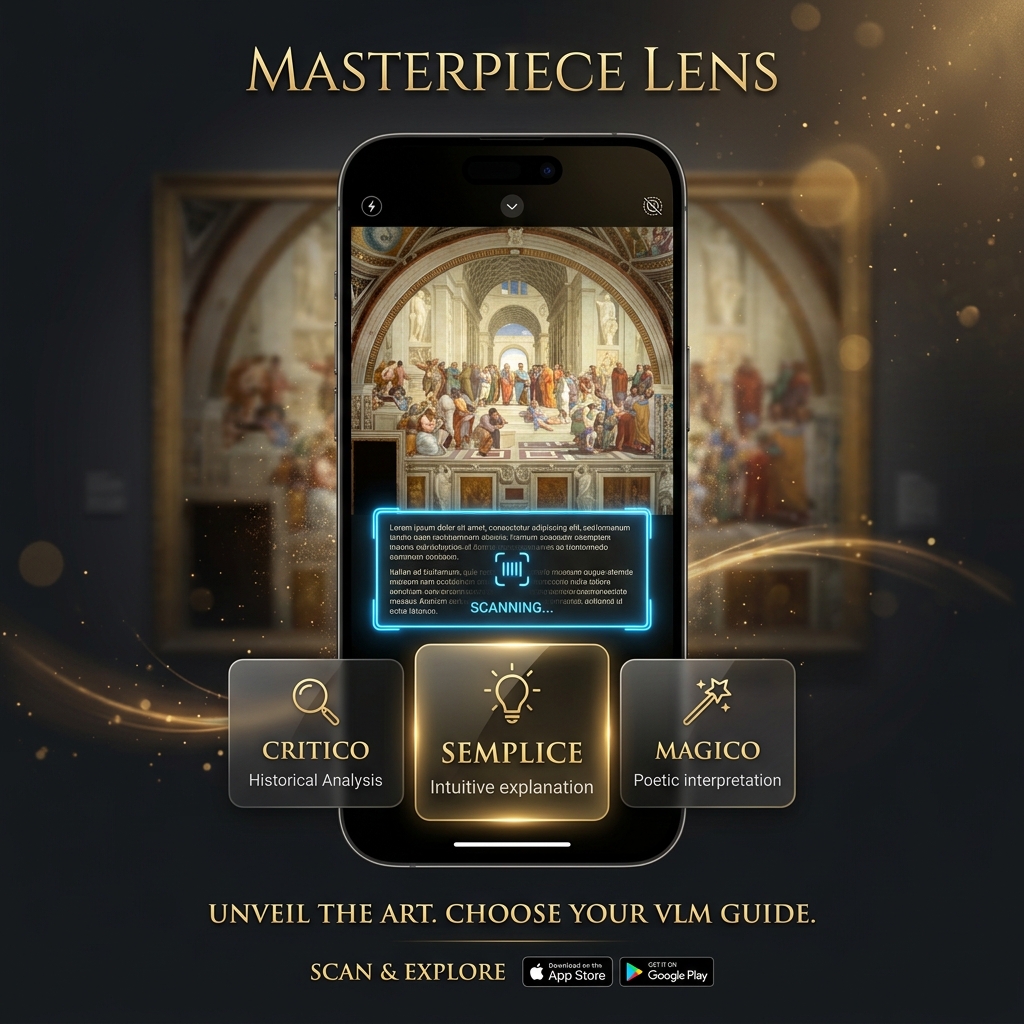
OCR with corrective editing and verified visitor profiles (Kids mode with fairy tale narration, Senior mode without emojis).
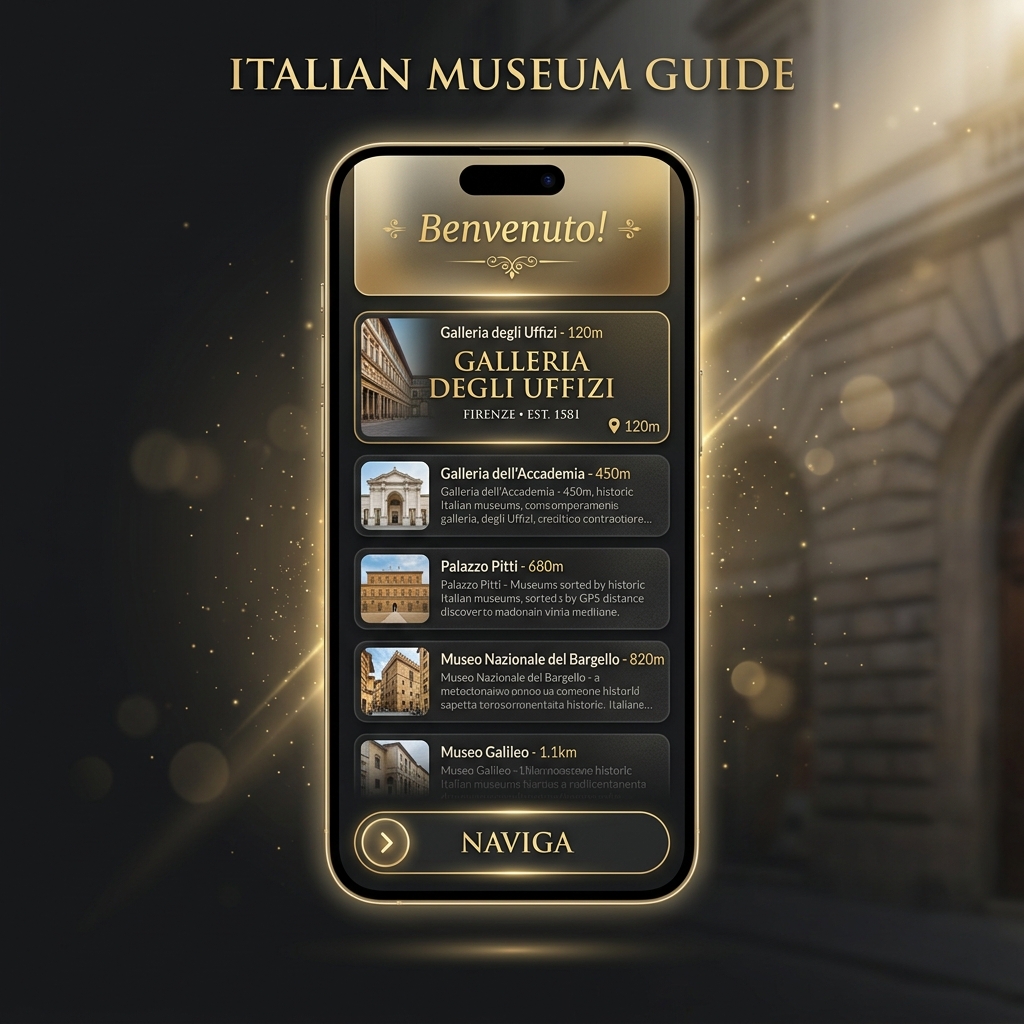
Official maps, nearby museums and curated experience packs with route, assets and Clio-guided opening.
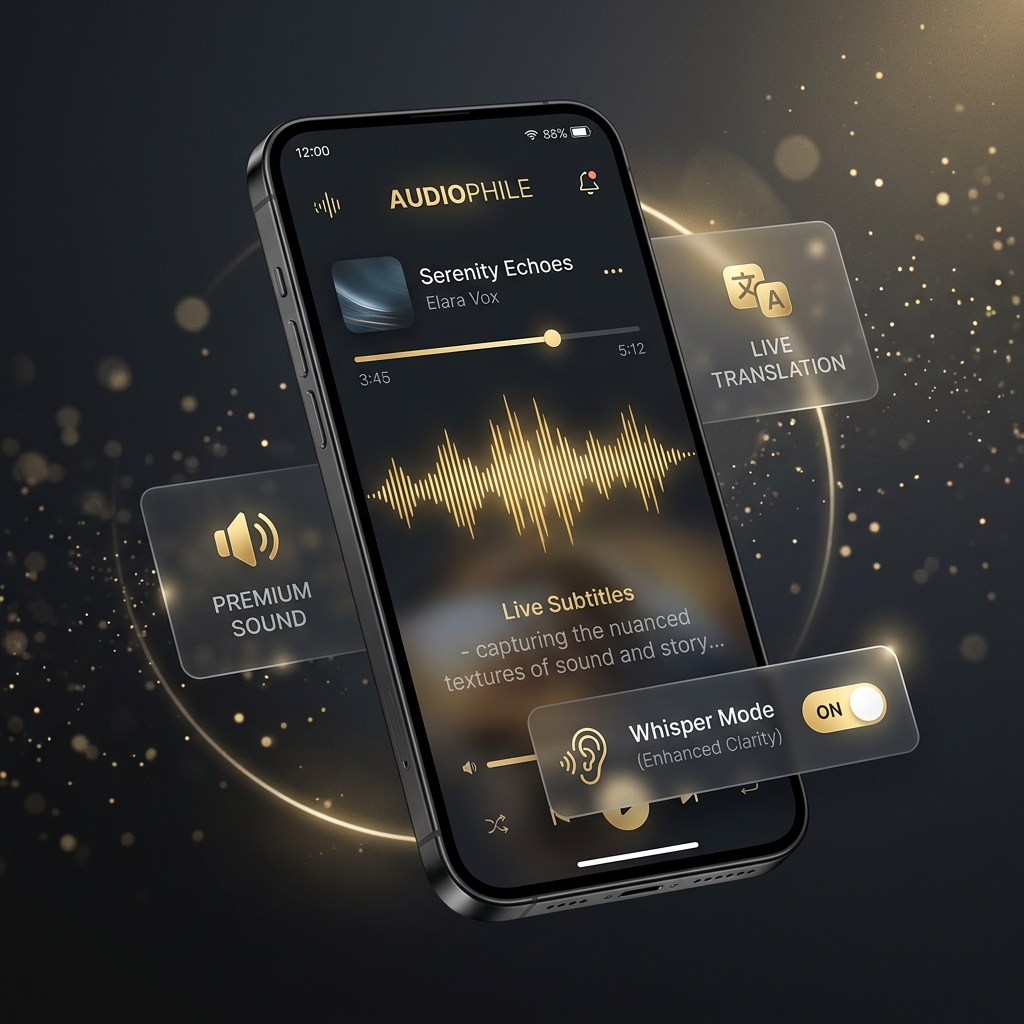
Native Live audio, waveform conversation, rich narration subtitles and image-first artwork exploration.
A precise record of what testers can install today, what exists only as an unreleased source candidate, and which entries are retained as historical development snapshots. Source progress is not presented as a distributed release.
This entry records only the incremental AI-integrity work in the current source. The YC build compiles, but v0.8.0 has no signed or distributable APK. Signing, cloud canary and exact-device qualification remain mandatory release gates.
:app:assembleYc succeeds; the output is unsigned and is not offered for download.v0.7.0 is the only signed and distributable APK currently available to authorised private testers. It carries the complete visit-first product line below. These implementation and artifact checks do not imply requalification on every exact device in the future v0.8 matrix.
The latest testing APK reframes the experience around the museum visit: Clio Live is available across the main app surfaces, local voice controls stay hidden unless relevant, Live and TTS cannot overlap, and Museums now lets visitors load curated route packs before scanning.
The YC demo APK adds the user-facing layer needed for a credible live demo: Clio Live now targets the Firebase Google AI native-audio model, exposes runtime errors with retry, and the chat image panel supports pinch-to-zoom, tap-to-focus, detected points of interest, and circle-select detail crops.
Historical snapshot: the previous multi-agent approach has now been superseded by the grounded generator/verifier workflow. Android builds a strongly typed InterpretationContract, carries evidence into local Gemma prompts, parses cloud claim-to-source mappings, and renders verified citations on each Clio message.
HttpsError safety and consent states now reach Android without being flattened into generic connectivity errors.compileDebugKotlin, unit tests, lintDebug, bundleRelease, Wear debug build, and Firebase syntax check.Major update focused on enhancing the visiting experience: support for tour guides (sync and BLE radar), gamification for families, and redesign of the post-visit journal into a historical scrapbook.
nativeMutex via JNI cancelProcess() when the timeout triggers, allowing scan retry.nativeMutex thread serialization.Operational plan for protecting MOSTRAmi's innovations through Italian patents (UIBM), European patents (EPO), and PCT international filings (WIPO).
National filing at the Italian Patent and Trademark Office. Establishes the priority date. Base cost €50 + €45 per extra claim. With attorney: ~€500-600 total.
Timeline: Immediate filing -> Examination 18-36 months -> Grant.
Within 12 months of the UIBM priority date, file at the European Patent Office. Covers up to 38 countries. Filing fee €1,390 + search €1,520 + exam €1,960.
EPO Requirement for AI: The invention must yield a technical effect, interacting with physical components (sensors, camera, TTS engines).
PCT (Patent Cooperation Treaty) filing to secure a 30-month window to select target national phases (US, Japan, China). International fee CHF 1,330 + search ~€1,875.
Timeline: 12 months from priority -> PCT filing -> 30 months to choose national entries.
Each innovation is assessed for technical effect (EPO requirement), novelty against prior art, and industrial application.
Method and apparatus for automatic artwork analysis via intelligent 3-tier routing: (1) on-device Gemma LLM via LiteRT-LM for local privacy-first inference, (2) Gemini 3.6 Flash cloud VLM via secure proxy with App Check, (3) degraded local fallback. Switching occurs automatically based on connectivity, battery level, preferences, and cost quotas.
Physical interaction with hardware (NPU/GPU, network sensors, battery manager) to optimize latency and power consumption
Smartify/Google Arts: cloud only. Bloomberg Connects: pre-rendered museum content only. None offer hybrid on-device/cloud routing
Museum guiding, art education, cultural tourism, visual accessibility guides
Voice synthesis system with 3 hierarchical levels and automatic failover: (1) offline neural Piper TTS with downloadable ONNX models, (2) Gemini Cloud TTS with voice persona prompting, (3) Android System TTS fallback. Includes a continuous conversational loop (ASR->LLM->TTS) for hands-free visits with real-time animated visuals.
Hardware orchestration of TTS engine, microphone, proximity sensor, and audio manager for smooth voice loops without screen input
izi.TRAVEL: pre-recorded playback only. No competitors offer 3-tier TTS with persona steering + hands-free ASR in a museum context
Blind visitor accessibility, hands-free audio guides, immersive museum routes
Method for instant image capture in public settings with zero-latency frame freezing (Freeze UX) and automatic on-device Gaussian blurring of detected visitor faces via ML Kit Face Detection, prior to saving to disk or transferring to cloud. AI analysis runs asynchronously on the frozen, redacted frame.
Real-time camera feed -> face detection -> blur -> freeze pipeline with asynchronous AI parallel processing
No museum app competitors implement pre-cloud GDPR face redaction. Google Lens: no third-party privacy. Smartify: no face blurring
GDPR compliance, public space photography, biometric data protection
Adaptive prompt engineering system that automatically adjusts lexical tone, syntactic complexity, narrative style, voice parameters (pitch, speed, TTS voice key) and output constraints based on the selected visitor profile (Kids 6-14, Popular, Academic, Adventurous) and language (IT, EN, FR, DE, ES). Each profile-language combination has a dedicated, reviewable system prompt.
Why two main modes? Cloud inference has a per-request operating cost; local inference uses downloaded assets and device compute, subject to device compatibility and distribution terms.
Runs offline on compatible phones after the required assets are installed, keeping artwork analysis on the device in local mode.
Unlock full cultural insights. Leverage the multimodal and academic power of Google's cloud servers.
Dedicated solution for museum institutions. Guided Museum Packs, custom Critic Datasets, official maps, and analytics.
MOSTRAmi adopts the most conservative policies on the European digital culture market in full compliance with GDPR regulations.
GDPR Face Redaction: The camera module automatically blurs visitor faces locally on the device. Cloud servers will never see biometric data from third parties.
No Hidden Profiling: Firebase Analytics and Crashlytics require your explicit consent at startup. opt-in diagnostics.
App Check Security: Cloud requests are encrypted and verified with Play Integrity tokens to prevent server spam and abuse.
Maps Without GPS: You can download and explore all museum maps and official guides even with geographic positioning completely disabled.
Full Data Portability: Your scan history can be exported as a formatted JSON file or permanently deleted in one tap.
Transparent Feedback: Quality feedback (thumbs up/down) is pushed to Firestore. Collected records are fully deletable under the GDPR right to be forgotten.
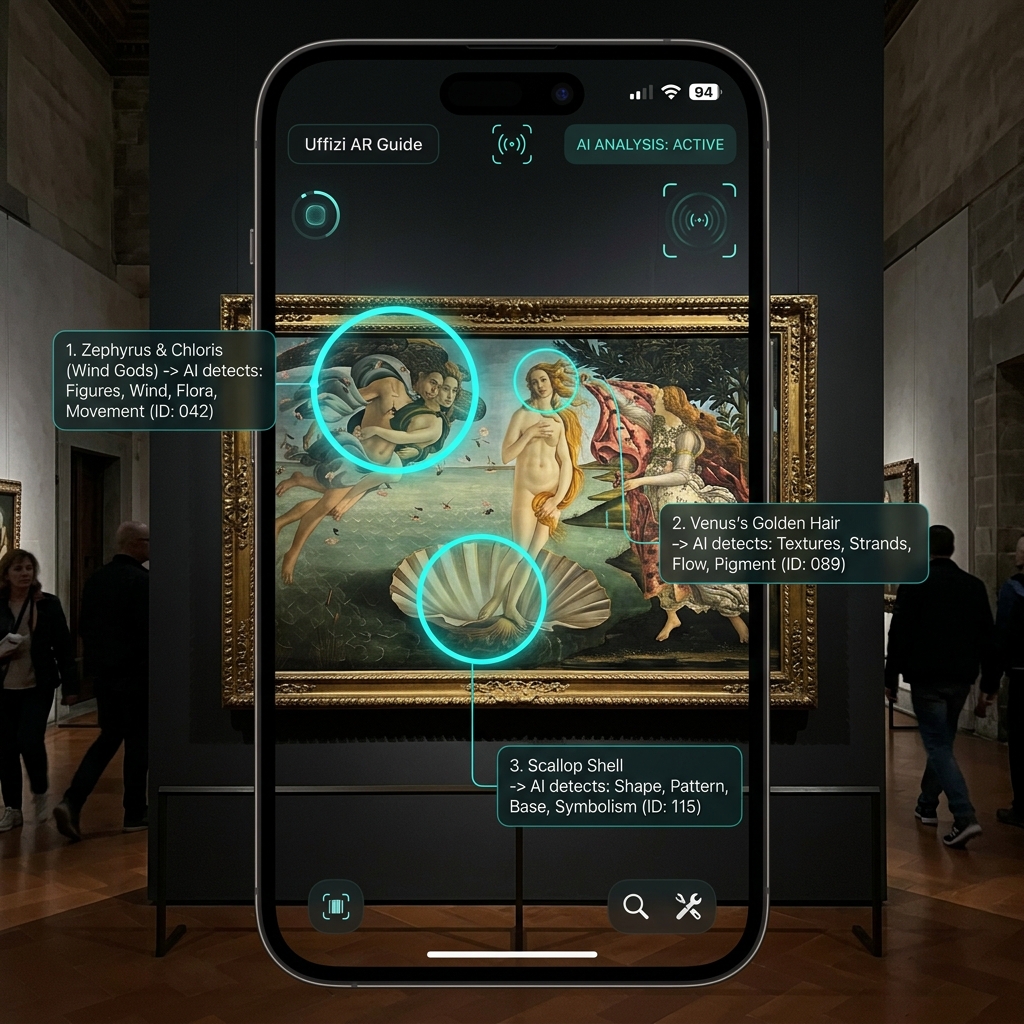
MOSTRAmi is the first museum AI application designed from the ground up to comply with European and Italian regulations. Every architectural decision reflects Responsible AI principles.
The EU AI Act (effective from August 1, 2024) imposes increasing obligations on AI applications in the European market. Non-compliant systems risk fines of up to 3% of global turnover. MOSTRAmi is already compliant, representing a first-mover regulatory advantage. For partner museums, choosing MOSTRAmi eliminates AI-related legal risks.
Clio adapts her cognitive and language levels to the visitor's profile: kid, senior, adult, or scholar. Strict support for 5 languages ensures equal treatment.
Explicit user consent checkbox in onboarding. App limits and AI chatbot responsibilities are transparently listed in the Terms of Service.
Automatic Face Obfuscation via ML Kit before any inference. In Privacy Mode, no data leaves the device RAM. Zero tracking, zero telemetries.
Lexroom-style RAG: responses grounded in art datasets. Unsupported claims are reduced through retrieval and visible citations; answers reference verified historical essays with APA/MLA citations.
No dedicated app development, no dedicated hardware, no servers. The museum activates MOSTRAmi in 24 hours simply by loading its catalog. Visitors use their own devices.
Compliance with EU AI Act and Law 132/2025 out of the box. GDPR face obfuscation, explicit consent, AI transparency. Museums can deploy AI with zero legal overhead.
5 languages (IT, EN, FR, DE, ES) with neural TTS and adaptive narrator profiles. No translation costs for the museum. Clio speaks the visitor's language automatically.
Hands-free voice chat for visitors with visual impairments. Senior profile with large text, slowed TTS, and screen-free guidance. Fully aligned with WCAG AA.
Dashboard with real metrics: most viewed artworks, average viewing times, qualitative AI feedback. Aggregated and anonymized data for improving curation.
The current broker retrieves from validated source packs and exposes provenance. Institution-authored archives become authoritative inputs only after rights review and a written partner integration.